education
Autism’s Three-Body Problem: Why Levels Fail Us
Autism’s Three-Body Problem: Why Levels Fail Us
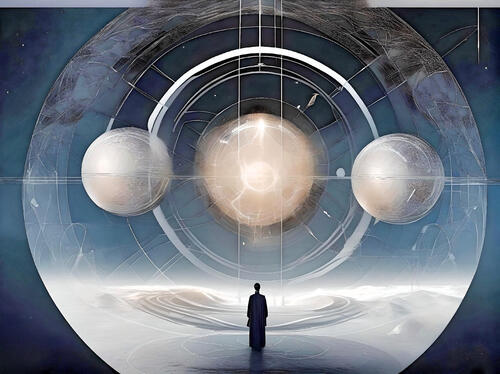
There’s a concept in physics known as the “three-body problem.” While the movement of two celestial bodies under gravity can be predicted relatively easily, a third is introduced, and the system’s behaviour becomes chaotic—impossible to determine with simple rules. Recent popularisations of this idea underscore a universal truth: some systems are simply too dynamic and interconnected for neat, reductionist solutions.
When it comes to Autism Spectrum Disorder (ASD) and its diagnostic “severity levels,” we face a strikingly similar human dilemma. The DSM-5’s introduction of Levels 1, 2, and 3 was intended to bring order and standardised language to the diverse ways autism presents, theoretically aiding treatment planning and resource allocation. In theory, this sounds pragmatic. In practice, it falls short.
The Paradox: Achievement vs. Internal Reality
As an autistic educator and researcher, I have lived the consequences of this system. My recent reclassification to Level 2 ASD—“requiring substantial support”—brought a strange mix of validation and frustration. This is a vindication because my experiences were previously dismissed by a psychiatrist who saw only my academic achievements. The frustration, however, is palpable because this label reinforced my conviction that autism’s diagnostic levels are profoundly misguided, reflecting society’s need for tidy categories rather than our complex realities.
The notion that academic or professional success negates significant autistic traits is deeply flawed. Navigating academic structures does not erase daily challenges: sensory overwhelm, executive dysfunction, and the relentless, exhausting labour of masking. These are high-cost performances, invisible to those who rely on superficial assessments. Support needs are fluid and context-dependent, not static or easily captured by a single label.
Our Own ‘Three-Body Problem’: Levels vs. Lived Experience
Much like the celestial three-body problem, attempting to categorise the infinite variability of autistic experience into three tiers quickly descends into its own form of chaos, often with detrimental human consequences. Consider the “three bodies” at play:
- The Autistic Individual: Each person is a universe of unique neurology, fluctuating internal states, sensory sensitivities, co-occurring conditions, strengths, and challenges.
- The Environment: An ever-changing landscape of social expectations, sensory inputs, available (or absent) accommodations, and varying levels of understanding and acceptance.
- The Diagnostic & Support System: A complex entity shaped by clinical judgement, resource constraints, policy, and systemic biases.
The interplay between these “bodies” means that support needs are rarely static or straightforward enough to be captured by a single, lifelong level. The system strives for predictability but, in reality, is far more complex and less predictable than such classifications allow, leaving many needs unmet and individuals unsupported.
As I wrote in “A Pox on Resilience”:
“Lazy welfare cheat or inspiration porn,
No middle ground for the differently born.”
These levels create false binaries, ignoring the constant evolution of support needs. Research confirms that static categories limit opportunities by pigeonholing individuals into narrow definitions of their abilities and challenges. They also fail to reflect the lived experience of autistic people, who often find their support needs changing over time and in different situations.
Beyond Simplistic Labels: Urgent Need for Systemic Change
For instance, a person with autism may require more support during a job interview than during a routine day at home. However, the current system does not account for such variations, leading to inadequate support in certain situations. While diagnosis can validate, the real harm arises from how levels are used in practice. Critics, including autistic advocates and researchers, rightly argue that these levels are poorly defined and fail to capture the dynamic, fluctuating nature of support needs across different contexts and life stages. As one advocate put it, “mild autism doesn’t mean one experiences autism mildly... It means YOU experience their autism mildly.” This insight highlights how these labels often reflect external perceptions rather than internal realities.
We urgently need systems that recognise:
- Support needs are dynamic and context-dependent.
- Achievement does not negate disability or the need for accommodations.
- Environmental modifications and societal acceptance are essential.
- Autistic voices must lead: Nothing About Us, Without Us!
Finding Our Voice, Demanding Better
Through poetry and teaching, I attempt to express what clinical language overlooks. When I write, “Barriers bloom like noxious weeds, / Choking paths, stifling needs,” I articulate the daily reality of navigating obstructive systems—a truth my neurodivergent students deeply understand.
More Than a Level: A Call to Action
I may be “Level 2 autistic,” but I am also an educator, poet, mentor, and advocate. These roles are not contradictions. Our value lies not in labels but our unique insights and collective strength.
The system that imposes these levels is in urgent need of transformation. Who better to lead that change than those who know its failings first-hand? Let’s dismantle these oversimplifications and build something truly supportive—together.


The Caduceus and the Creed: A Medical Misconception
"Primum non nocere," oft misapplied,
Not absolute, but a principle to guide.
In Hippocrates' time and modern day,
It's context and intent that hold sway.
The Greek, "ὀφελέειν ἢ μὴ βλάπτειν," rings true,
"To benefit, or at least do no harm," anew.
A nuanced approach, not black and white,
Balancing risks in healing's light.
The caduceus twined, with wings so bright,
A symbol of commerce, not healing's might.
Asclepius' staff, with serpent alone,
The true emblem of medicine, long known.
In modern clinics, where science reigns,
Ethical practice carefully maintains
A balance 'twixt benefit and potential harm,
With patient's values central to this charm.
Open communication, a cornerstone strong,
Where patient and doctor, together belong.
In shared decisions, they navigate
The complex paths that health dictate.
Some may twist ethics for selfish gain,
But true healers strive to ease pain.
With evidence-based practice as their guide,
They stand against misinformation's tide.
"To benefit, or at least do no harm," evolves still,
Not perfection, but good faith's will.
From rigorous study, and trials so keen,
True healing emerges, complex yet clean.
In healing's art, there's no guarantee,
But ethical practice sets conscience free.
With care and skill, and wisdom's light,
We navigate health's day and night.
Beyond the Lie: True Healing’s Path
Πρῶτον μὴ βλάπτειν, a principle misunderstood,
Not black and white, but shades of good.
Where healing's art meets science's light,
And ethical minds must choose what's right.
The caduceus gleams, a symbol misconstrued,
Where commerce and care are often viewed.
But Asclepius' staff, with single snake entwined,
Represents true healing, carefully refined.
In modern halls where choices weigh,
Doctors and patients find their way.
Through risks and benefits, they navigate,
Shared understanding they cultivate.
Some peddle cures with hollow claims,
Exploiting fears for selfish aims.
But true healers, with knowledge sound,
On evidence their practice ground.
"Primum nil nocere," a guide, not chain,
Encouraging thought in health's domain.
Balance sought 'twixt act and pause,
For healing's not without its flaws.
In research labs and by bedsides too,
Ethical minds seek what is true.
Through trials tested, their wisdom grows,
A beacon bright as knowledge flows.
ὀφελέειν ἢ μὴ βλάπτειν, the call remains,
For those who heal, not those who feign.
In partnership with those they treat,
They strive to make care more complete.
The Healer’s Art: Science, Skill, and Care
Primum non nocere, a guiding light,
Not rigid rule, but wisdom's sight
ὀφελέειν ἢ μὴ βλάπτειν, in balance true,
Weighing risks and benefits anew.
In halls where healers ply their art,
With science, skill, and caring heart
They navigate the complex maze,
Of modern medicine's intricate ways.
Some twist this creed for selfish gain,
Exploiting fears, causing pain
But true healers, with ethics sound,
Engage with trust, solid ground.
Caduceus coiled, a symbol pure,
Of commerce now, no longer sure
Asclepius' staff, the truer sign,
Of healing's art, both old and fine.
Shared decisions, patient and physician,
Together they assess, talk with clinician
Of risks and hopes, of fears and dreams,
Charting a course through health's extremes.
In shadowed corners, whispers grow,
Of cures that science doesn't know
But evidence-based practice stands,
Against the lure of charlatan's hands.
Primum non nocere, evolving still,
Not perfection, but good faith's will
To strive for best outcomes always,
While minimising harm's dark haze.
From trials rigorous, knowledge flows,
Not from deceit or cunning shows
The path of healing, nuanced, true,
Leads through care, both old and new.
The Symphony of Woodpeckers
The Symphony of Woodpeckers
In the forest's heart, where shadows play,
Woodpeckers thrive in their unique way.
From Picus viridis, green and bright,
To others that grace the woods with might.
European Green Woodpecker (Picus viridis)
In emerald hues, the green woodpecker,
With rhythmic beats, it marks its sector,
pü-pü-pü-pü-pü-pü-pü,
A melody both wild and true.
In meadows lush, it hunts for ants,
With probing tongue, it takes its chance.
It drills for prey in hollowed trees,
Where insects dwell, it finds its ease.
Downy Woodpecker (Picoides pubescens)
Small and spry, with a gentle call,
Its tiny beak, a tool for all,
*pik* it cries, with whinnying fall,
In suburban parks, it stands tall.
It flits through trees with nimble grace,
In orchards sweet, it finds its place.
On suet feeders, it will dine,
In winter months, a lifeline fine.
Hairy Woodpecker (Picoides villosus)
Larger kin with a bill so long,
Its drumming fast, a rapid song,
*peek!* it calls, a sharp, strong tone,
In deeper woods, it finds its home.
With powerful pecks, it drills for prey,
In towering pines, it spends its day.
It scales the bark to find its feast,
In beetle larvae, it finds peace.
Pileated Woodpecker (Dryocopus pileatus)
A giant with a crest of flame,
Its powerful peck, a forest claim,
tap̚tap̚tap̚, it carves its niche,
In ancient trees, where secrets stitch.
In forests old, it digs for grubs,
With mighty force, it splits the shrubs.
Its laughter rings through wooded halls,
In courtship flights, it swoops and calls.
Northern Flicker (Colaptes auratus)
With spotted belly and a bib of black,
It forages ground, no need to hack,
kyü-kyü-kyück, it calls with grace,
In open fields, it finds its place.
On grassy plains, it seeks its feast,
With ants and beetles, it finds peace.
It drums on ground in rhythmic dance,
In courtship's spell, it takes its chance.
Three-toed Woodpecker (Picoides tridactylus)
In northern woods, where spruces stand,
It scales the bark with skilled hand,
Removing strips to find its prey,
In beetle galleries, it stays.
Its quiet taps are soft and light,
In snowy realms, it finds delight.
Each species, unique in form and song,
Evolved to fit where they belong,
From beak to call, each niche they fill,
A testament to nature's will.
With varied beaks and feathers bright,
They've carved their paths in day and night.
In dappled light, where leaves entwine,
Woodpeckers dance, a sight divine,
With every tap̚, a note of grace,
A symphony in nature's space.
So let us laud these feathered sprites,
In morning's glow and moonlit nights,
For woodpeckers, diverse and fair,
Bring music to the woodland air.